
The evidentiary core
Four AMEE Guides, a searchable publication record, edited volumes, and the validated tools built along the way.
Edited volumes
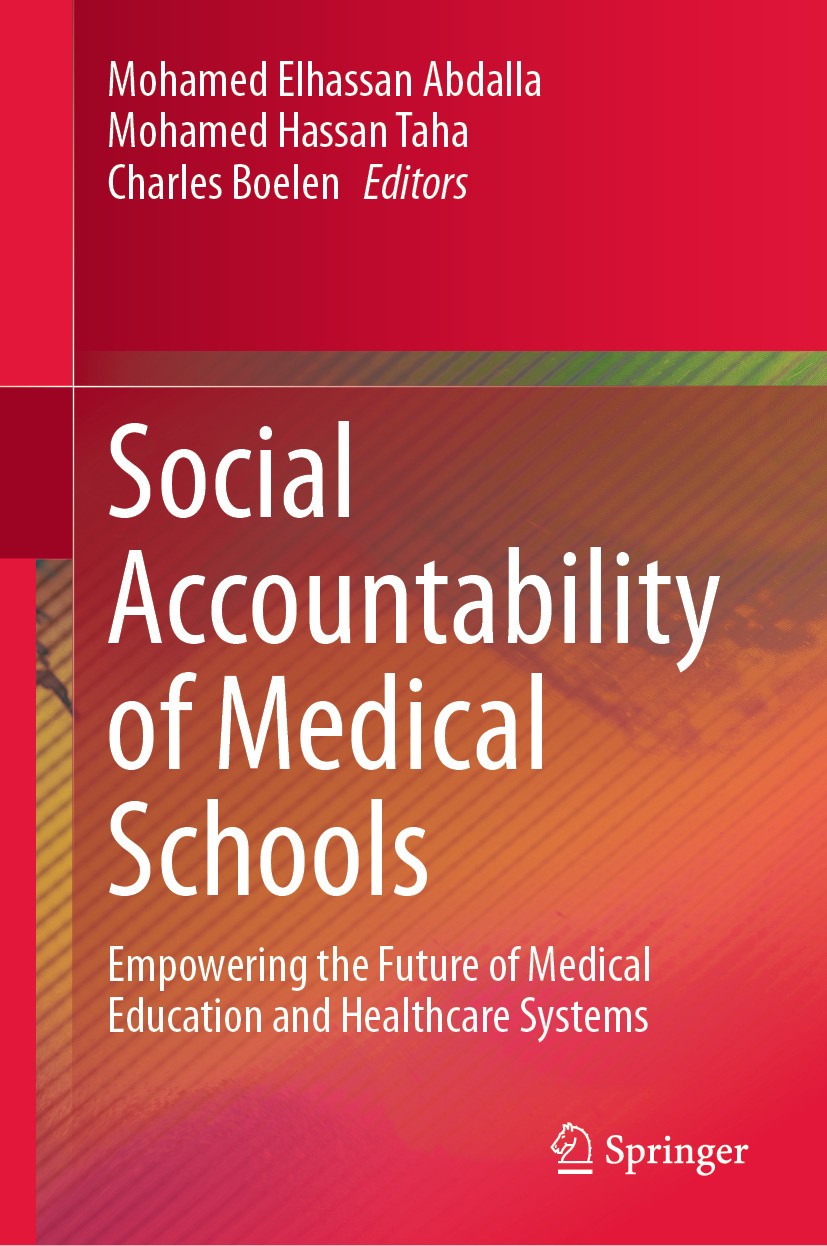
Social Accountability of Medical Schools: Empowering the Future of Medical Education and Healthcare Systems
The Evolving Role of the Medical Profession and Medical Graduates (pp. 17–29); Governance and Leadership for Socially Accountability (pp. 53–71)
Co-edited by Mohamed Elhassan Abdalla, Mohamed Hassan Taha and Charles Boelen, this book explores how medical schools can align education, research and service with community health priorities. International perspectives and case studies address leadership, governance, community engagement, curriculum reform and assessment. Dr Taha also co-authored two chapters examining the evolving role of the medical profession and the governance and leadership needed to advance social accountability.
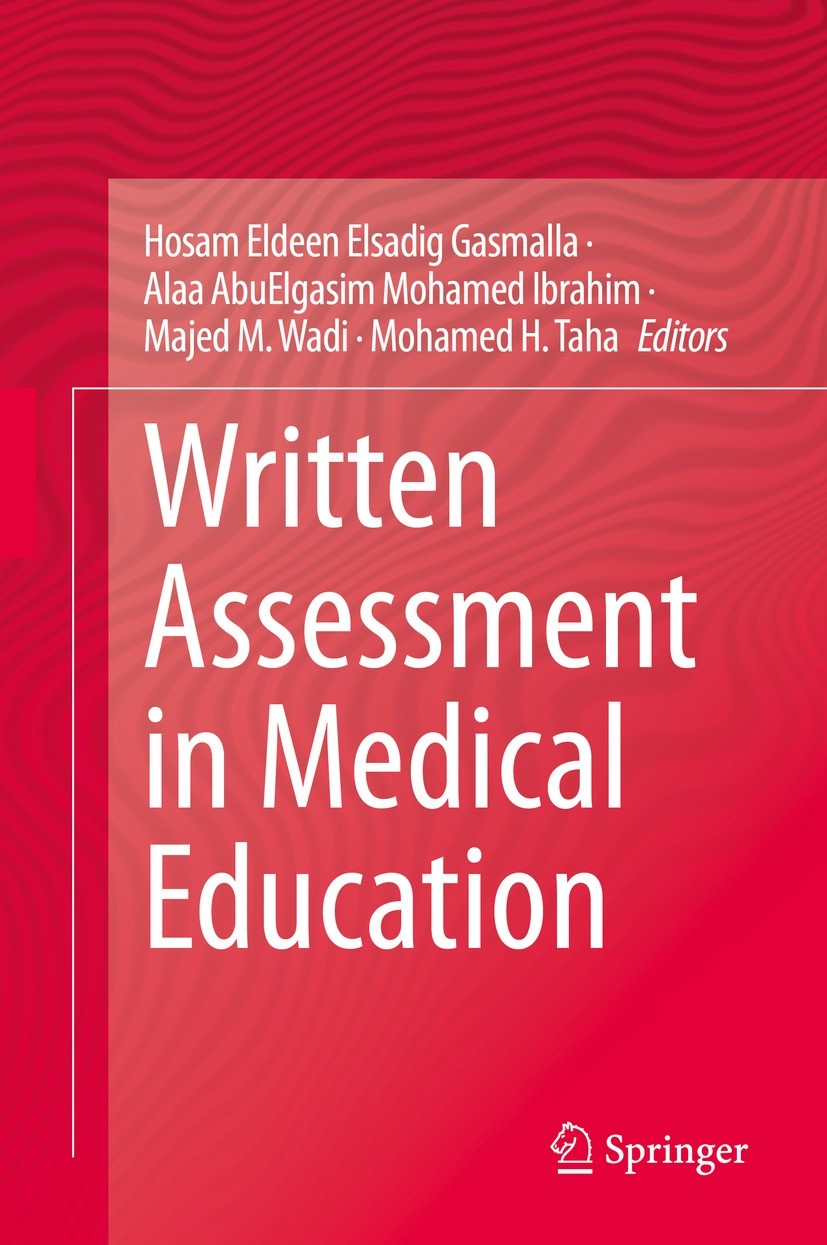
Written Assessment in Medical Education
Constructed Response Items (pp. 39–48)
A practical reference co-edited by Dr Mohamed H. Taha, supporting medical educators in designing and evaluating written assessments. The book covers assessment blueprints, question formats, psychometric analysis, standard setting and progress testing. Dr Taha authored the chapter “Constructed Response Items,” which explains essay and short-answer formats, their applications, strengths and limitations, and how to develop questions that assess higher-order thinking.
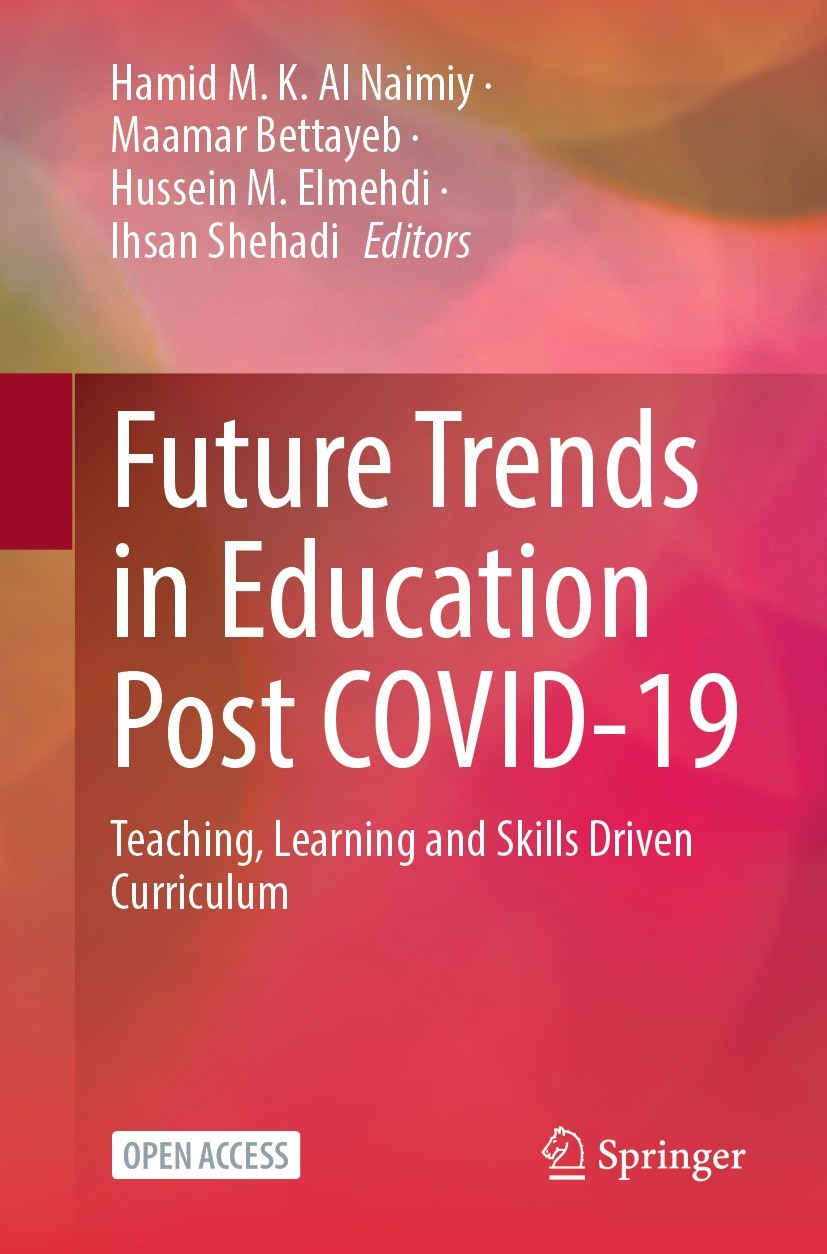
Future Trends in Education Post COVID-19: Teaching, Learning and Skills Driven Curriculum
Effectiveness of HyFlex Simulation-Based Clinical Learning in Comparison to Traditional Learning in Undergraduate Clinical Education (pp. 191–203)
Dr Mohamed H. Taha contributed to this open-access conference volume through a co-authored chapter on HyFlex simulation in clinical education. Drawing on a survey of 124 radiography students and graduates at the University of Sharjah, the chapter examines reported satisfaction and learning experiences. It discusses the potential of flexible simulation while recognising participants’ preference for face-to-face learning when acquiring practical skills.
Signature guides
Leadership as a Catalyst for Advancing Social Accountability in Health Professions Education
Shows how leadership can turn social accountability commitments into institutional action. Provides practical guidance for aligning governance, curricula, community partnerships, and research with population health priorities. Read guide Social accountability in health professions education Guide No. 182Building Resilient Health Professions Education in Fragile Contexts
Offers practical guidance for educators and institutional leaders seeking to sustain training during crises. It connects immediate educational responses with longer-term preparedness, learner support and institutional recovery in fragile settings. Read guide Resilience, Fragile Contexts and Adaptive Educational Strategies Guide No. 175Instilling Social Accountability into the Health Professions Education Curriculum with International Case Studies
Helps educators translate community health priorities into curriculum decisions. Combines a practical framework with international examples to support socially accountable teaching and institutional commitment. Read guide Social accountability in health professions education Guide No. 162Integrating the Social Determinants of Health into Curriculum
Connects curriculum development with health equity by helping educators prepare learners to understand patients’ social circumstances. Supports medical education that responds to the needs of underserved communities. Read guide Social accountability in health professions educationPublication record
| Title | Authors | Journal | Year | |
|---|---|---|---|---|
| Internet Use and Addiction Among Medical Students in Qassim University, Saudi Arabia This cross-sectional study explored internet use among 209 preclinical medical students at Qassim University, Saudi Arabia, using Young’s Internet Addiction Test. Overall, 12.4% scored within the study’s internet-addiction category, and many respondents reported sleep disruption and academic difficulties associated with internet use. The findings highlight the importance of awareness, healthy internet habits and student support. As a single-institution study based on self-reported responses, it does not establish that internet use caused these difficulties. |
Mohamed H. Taha; Khalid Shehzad; Ahmad S. Alamro; Majed Wadi | Sultan Qaboos University Medical Journal, 19(2), e142–e147 | 2019 | DOI |
| Medical Education in Sudan: A Recommendation to Adopt Competency-Based Medical Education Curricula for Improving Practices (SudaniMEDs) This paper recommends developing SudaniMEDs, a national competency framework to guide medical education in Sudan. It proposes reviewing international frameworks, consulting medical schools and regulatory bodies, building stakeholder consensus and seeking external expert review. The suggested framework would define core and enabling competencies, clinical presentations and essential practical skills. Its purpose is to guide curriculum development and establish shared expectations for graduates’ readiness to meet patients’ needs. |
Taha, M. H. | Sudan Journal of Medical Sciences, 14(3), 126–131 | 2019 | DOI |
| Effectiveness of the New Approach of Student-led Seminars in a Saudi Medical College: Students’ Perceptions This cross-sectional study surveyed 455 medical students at Qassim University about a revised student-led seminar format. Changes included clearer learning objectives, compulsory advisor consultation, more frequent presentations and assessment rubrics. Students reported benefits for confidence, presentation skills and understanding, although views on rubrics and independent information-searching differed. The findings offer practical insights into structured student-led learning, while reflecting self-reported perceptions from one institution rather than measured improvements in examination performance. |
Ahmad S. Alamro; Majed Wadi; Mohamed H. Taha; Mohamed Nour-El-din Saleh | Aljouf University Medical Journal, 5(1), 19–26 | 2018 | DOI |
| Students’ perception of the learning environment and its relation to their study year and performance in Sudan This cross-sectional study examined perceptions of the learning environment among 638 medical students at the University of Gezira, Sudan, using the Arabic DREEM questionnaire. Students’ overall perceptions were more positive than negative, but differed across stages of study and levels of academic achievement. Higher-achieving students reported more positive perceptions than lower-achieving students. The findings support examining learning needs at different academic stages and investigating specific areas for improvement. These associations do not establish whether the learning environment causes differences in academic performance. |
Yasar Ahmed; Mohamed H. Taha; Salma Al-Neel; Abdelrahim M. Gaffar | International Journal of Medical Education, 9, 145–150 | 2018 | DOI |
Instruments and tools
Social Accountability Inventory for PBL
A validated instrument for evaluating how well social accountability principles are reflected in PBL case scenarios.
Curriculum committees, PBL case writers, programme evaluators.
Read moreThe Assessment Clock
A framework guiding assessment decision-making during educational emergencies — building on Van der Vleuten's assessment utility model, it shows how the relative weight of validity, reliability, educational impact, acceptability and feasibility shifts by context, so educators can make transparent, defensible assessment decisions when conventional approaches become impracticable.
Assessment committees and programme leaders planning for emergency or fragile-context delivery.