
The evidentiary core
Four AMEE Guides, a searchable publication record, edited volumes, and the validated tools built along the way.
Edited volumes
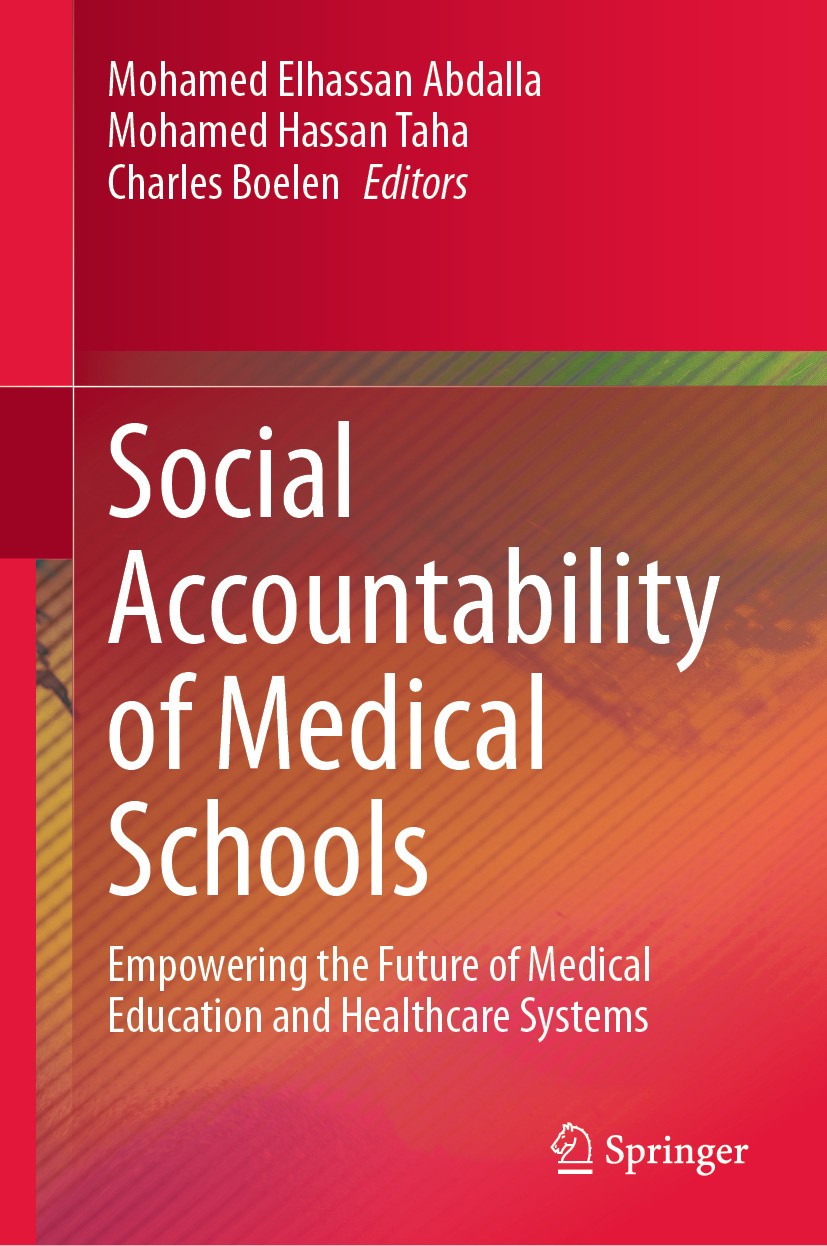
Social Accountability of Medical Schools: Empowering the Future of Medical Education and Healthcare Systems
The Evolving Role of the Medical Profession and Medical Graduates (pp. 17–29); Governance and Leadership for Socially Accountability (pp. 53–71)
Co-edited by Mohamed Elhassan Abdalla, Mohamed Hassan Taha and Charles Boelen, this book explores how medical schools can align education, research and service with community health priorities. International perspectives and case studies address leadership, governance, community engagement, curriculum reform and assessment. Dr Taha also co-authored two chapters examining the evolving role of the medical profession and the governance and leadership needed to advance social accountability.
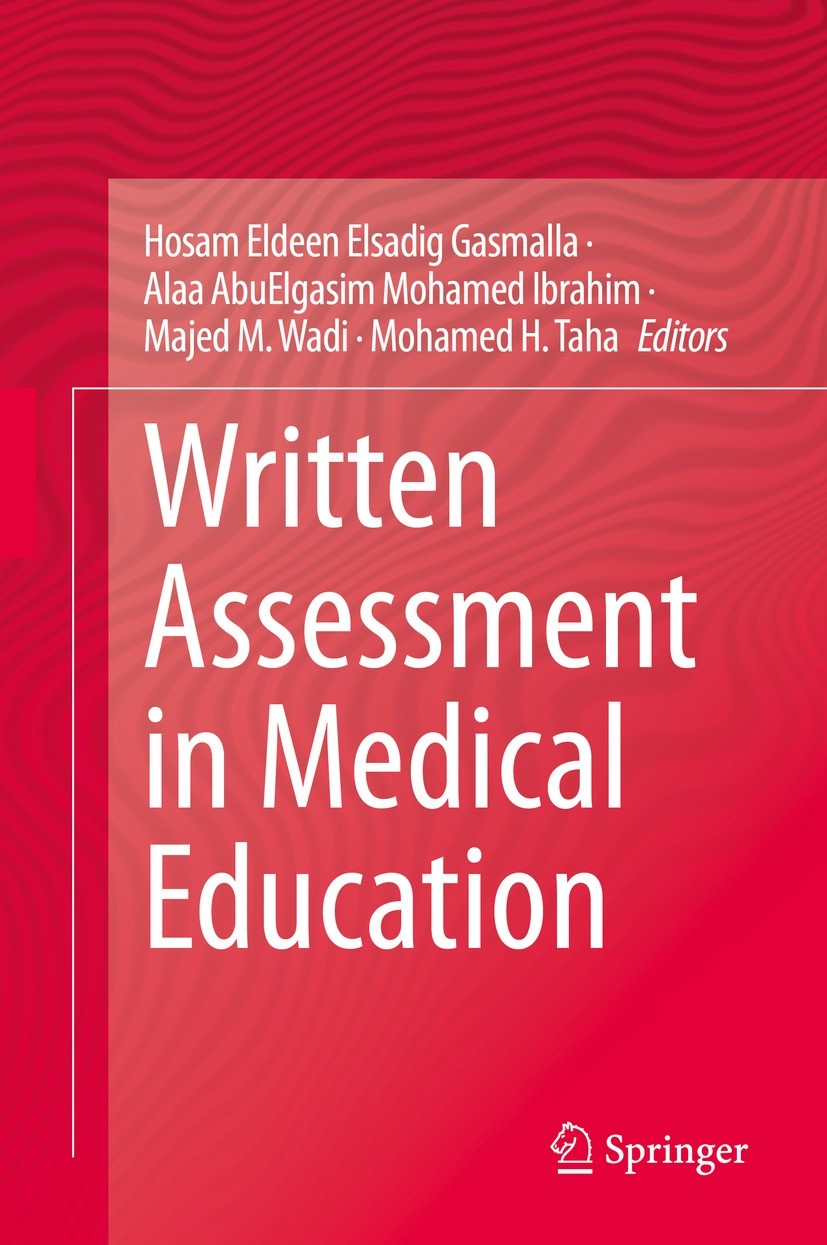
Written Assessment in Medical Education
Constructed Response Items (pp. 39–48)
A practical reference co-edited by Dr Mohamed H. Taha, supporting medical educators in designing and evaluating written assessments. The book covers assessment blueprints, question formats, psychometric analysis, standard setting and progress testing. Dr Taha authored the chapter “Constructed Response Items,” which explains essay and short-answer formats, their applications, strengths and limitations, and how to develop questions that assess higher-order thinking.
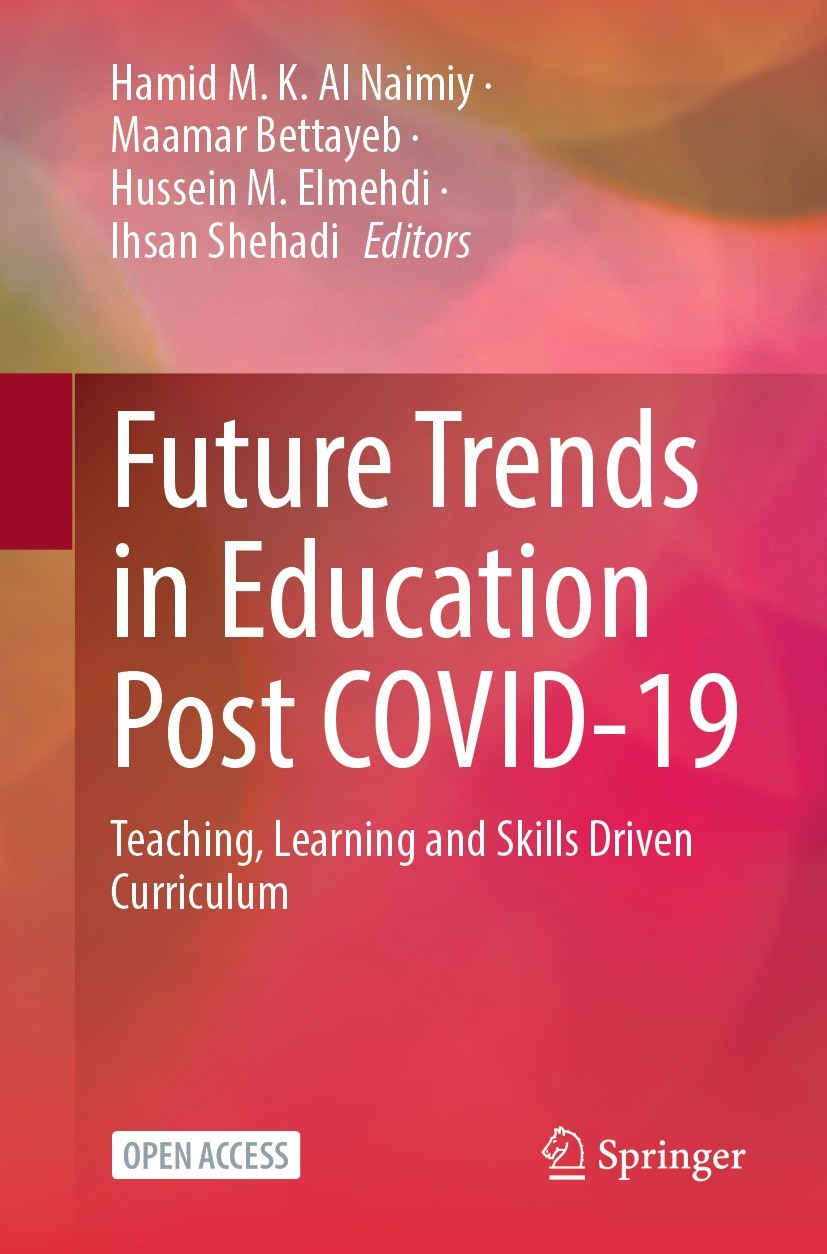
Future Trends in Education Post COVID-19: Teaching, Learning and Skills Driven Curriculum
Effectiveness of HyFlex Simulation-Based Clinical Learning in Comparison to Traditional Learning in Undergraduate Clinical Education (pp. 191–203)
Dr Mohamed H. Taha contributed to this open-access conference volume through a co-authored chapter on HyFlex simulation in clinical education. Drawing on a survey of 124 radiography students and graduates at the University of Sharjah, the chapter examines reported satisfaction and learning experiences. It discusses the potential of flexible simulation while recognising participants’ preference for face-to-face learning when acquiring practical skills.
Signature guides
Leadership as a Catalyst for Advancing Social Accountability in Health Professions Education
Shows how leadership can turn social accountability commitments into institutional action. Provides practical guidance for aligning governance, curricula, community partnerships, and research with population health priorities. Read guide Social accountability in health professions education Guide No. 182Building Resilient Health Professions Education in Fragile Contexts
Offers practical guidance for educators and institutional leaders seeking to sustain training during crises. It connects immediate educational responses with longer-term preparedness, learner support and institutional recovery in fragile settings. Read guide Resilience, Fragile Contexts and Adaptive Educational Strategies Guide No. 175Instilling Social Accountability into the Health Professions Education Curriculum with International Case Studies
Helps educators translate community health priorities into curriculum decisions. Combines a practical framework with international examples to support socially accountable teaching and institutional commitment. Read guide Social accountability in health professions education Guide No. 162Integrating the Social Determinants of Health into Curriculum
Connects curriculum development with health equity by helping educators prepare learners to understand patients’ social circumstances. Supports medical education that responds to the needs of underserved communities. Read guide Social accountability in health professions educationPublication record
| Title | Authors | Journal | Year | |
|---|---|---|---|---|
| Embedding Social Accountability in Radiography Education and Practice: A Call to Lead, Educate, and Serve This commentary proposes a multilevel approach to embedding social accountability in radiography education and practice. It connects curriculum reform, community partnerships, policy alignment, and research with action at executive, management, and operational levels. It outlines responsibilities for educators, policymakers, researchers, and practitioners to advance equitable care responsive to community needs. |
Elshami, W., Abuzaid, M., & Taha, M. H. | Journal of Medical Imaging and Radiation Sciences | 2025 | DOI |
| Enhancing the understanding of safety and the quality of patient care among medical and health sciences students in interprofessional climate: an interventional study This study evaluated an online interprofessional workshop involving 248 students and 20 facilitators at the University of Sharjah. Students from medicine, dentistry, pharmacy and health sciences explored patient safety through interactive sessions and clinical case discussions. Post-workshop survey scores improved across medical professionalism, healthcare leadership and precision medicine. The findings suggest value in collaborative learning for students’ understanding of patient safety, while reflecting immediate educational outcomes rather than demonstrated improvements in clinical practice or patient care. |
Salman Yousuf Guraya; Nabil Sulaiman; Ahmed Hasswan; Vida Abdolhamid Salmanpour; Feras Jassim Jirjees; Mohamed Hassan Taha; Jennat Alamara; Sausan A.L. Kawas; Manal Awad; Jacqueline Maria Dias; Leena R. David; Mohamed Aly Haider; Shaista Salman Guraya; Nihar Ranjan Dash; Amal Al-Qallaf; Sarra Shorbagi; Ibrahim Mahmoud | BMC Health Services Research, 25, Article 156 | 2025 | DOI |
| From Hype to Implementation: Embedding GPT-4o in Medical Education This viewpoint explores how GPT-4o could support medical education through simulated patient encounters, adaptive feedback and opportunities to practise communication and clinical reasoning. It discusses potential applications in assessment and procedural training, alongside concerns about accuracy, bias, privacy and equitable access. The authors recommend small pilot projects, faculty training, AI literacy, ethical guidance and ongoing evaluation to integrate these tools into curricula with educator oversight. The paper offers recommendations for responsible implementation and identifies priorities for further research. |
Sabouni, S., Moufti, M. A., & Taha, M. H. | JMIR Medical Education, 11, e79309 | 2025 | DOI |
| Instilling Social Accountability into the Health Professions Education Curriculum with International Case Studies: AMEE Guide No. 175 This guide presents a framework for embedding social accountability across curriculum design, implementation, and evaluation in health professions education. International case studies illustrate how institutions can connect learning with community health priorities. It also emphasises the governance and policy commitments needed to prepare compassionate, competent graduates who can contribute to health-system change. |
Abdalla, M. E., Taha, M. H., Onchonga, D., Preston, R., Barber, C., Green-Thompson, L., Taylor, D., Cameron, E., Woollard, R., & Boelen, C. | Medical Teacher | 2025 | DOI |
| Social Accountability in Radiography Education: Scoping Review This scoping review synthesises 19 articles on social accountability in radiography education. It identifies five themes: compassionate communication and patient-centred care; cultural sensitivity and equity; environmental sustainability; education aligned with community needs; and research addressing health needs and disparities. It calls for consistent assessment approaches, supportive institutional policies, and accreditation standards that reflect societal priorities. |
Abuzaid, M., Elshami, W., & Taha, M. H. | Radiography | 2025 | DOI |
| Dental Education Amid Armed Conflict in Sudan: Unveiling the Impact on Training This mixed-methods study examines disruption to dental education during Sudan’s armed conflict, combining data from 29 dental schools with five interviews on postgraduate training. It reports attacks on 79.3% of the schools studied, alongside interruptions to clinical training and resource shortages. The authors highlight online learning, training partnerships, better-equipped dental centres across Sudan’s states and crisis preparedness as approaches to supporting continuity and strengthening educational resilience. |
Mahgoub, E. A. A., Osman, S., Haga, M. B., Khairy, A., Osman, S. H. M., Abbu Hassan, A. M., Ssemwanga, N., Elgaali, E. G., & Taha, M. H. | PLOS ONE, 19(10), e0311583 | 2024 | DOI |
| Exploring Strategies, Programs, and Influencing Factors for Integrating Social Accountability into Undergraduate Medical Education: A Scoping Review This scoping review synthesises 17 studies on integrating social accountability into undergraduate medical education. It examines admissions strategies, community-based programmes, and institutional factors shaping implementation. The findings highlight uneven adoption and limited evidence on barriers, supporting further research and stronger alignment between medical training, community needs, and health equity. |
Abdalla, M. E., Taha, M. H., Onchonga, D., Nour, N., Kelly, D., Harney, S., & McGrath, D. | BMC Medical Education | 2024 | DOI |
| Going Beyond Competencies: Building Blocks for a Patient- and Population-Centered Medical Curriculum This position paper proposes a medical curriculum organized around the needs of patients, families and communities. It argues for stronger integration of social sciences, closer partnerships between medical schools and healthcare systems, and greater collaboration across health professions. The authors outline eight curricular transformations, addressing patient participation, patient safety and the growing role of artificial intelligence. Their proposed approach connects medical education more closely with population health challenges and the changing realities of healthcare delivery. |
Magzoub, M. E., Taha, M. H., Waller, S., Al Eissa, A. M., Hamdy, H., Norcini, J., Al Marzooqi, S., Shaban, S., Elhassan Abdalla, M., & Schmidt, H. | Medical Teacher | 2024 | DOI |
| Integrating Research and Teaching in Medical Education: Challenges, Strategies, and Implications for Healthcare This literature review examines challenges and strategies for integrating research with teaching in medical education. It identifies limited resources, competing curriculum demands and institutional culture as important barriers. Proposed approaches include embedding research methodology across subjects and stages of training, supporting faculty participation and encouraging interdisciplinary collaboration. The article offers recommendations for developing learning environments that connect research and teaching; it does not report a new intervention demonstrating improved student or patient outcomes. |
Yasar Ahmed; Mohamed Hasan Taha; Simaa Khayal | Journal of Advances in Medical Education & Professionalism, 12(1), 1–7 | 2024 | DOI |
| Integrating the Social Determinants of Health into Curriculum: AMEE Guide No. 162 This guide outlines evidence-informed approaches to integrating social determinants of health into undergraduate and postgraduate medical curricula. Drawing on published literature and case studies, it examines how social and cultural circumstances shape health and healthcare. It supports preparing future professionals to deliver comprehensive, equitable care, particularly for underserved and marginalised communities. |
Abdalla, M. E., Taha, M. H., Onchonga, D., Magzoub, M. E., Au, H., O'Donnell, P., Neville, S., & Taylor, D. | Medical Teacher | 2024 | DOI |
Instruments and tools
Social Accountability Inventory for PBL
A validated instrument for evaluating how well social accountability principles are reflected in PBL case scenarios.
Curriculum committees, PBL case writers, programme evaluators.
Read moreThe Assessment Clock
A framework guiding assessment decision-making during educational emergencies — building on Van der Vleuten's assessment utility model, it shows how the relative weight of validity, reliability, educational impact, acceptability and feasibility shifts by context, so educators can make transparent, defensible assessment decisions when conventional approaches become impracticable.
Assessment committees and programme leaders planning for emergency or fragile-context delivery.